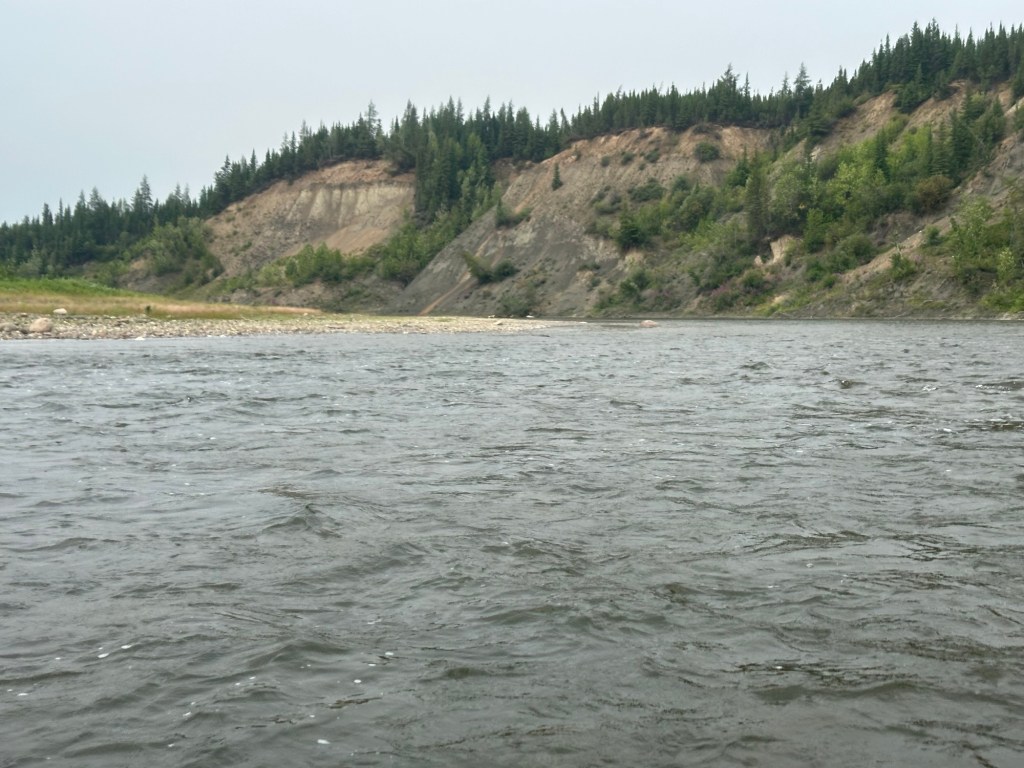
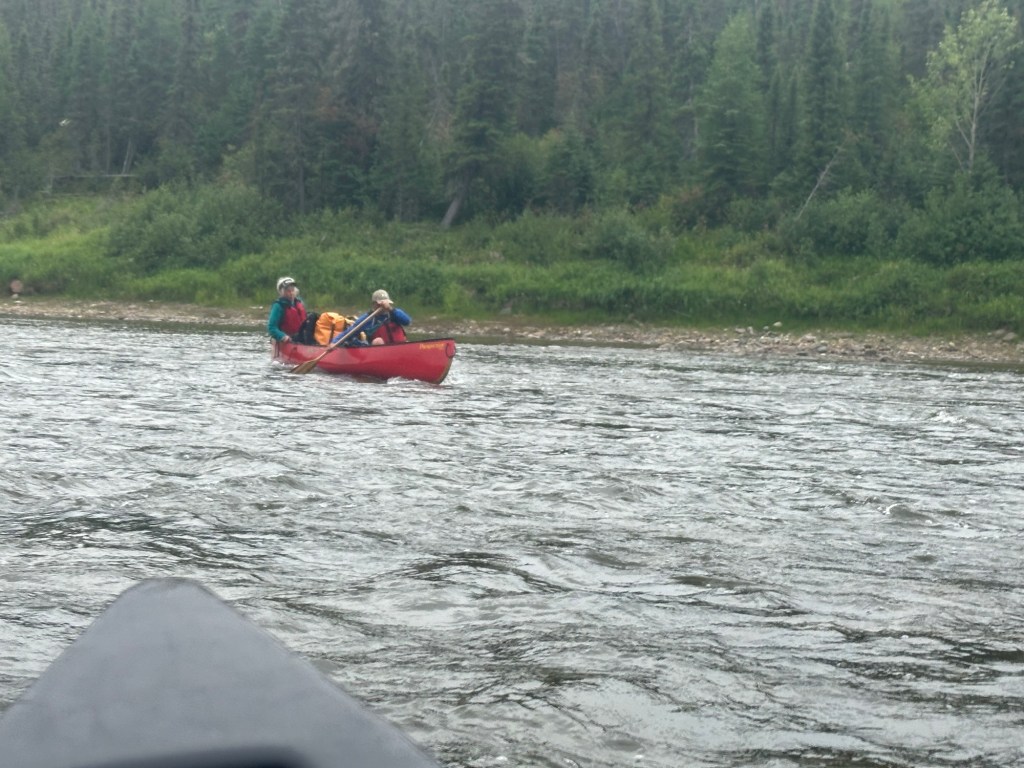
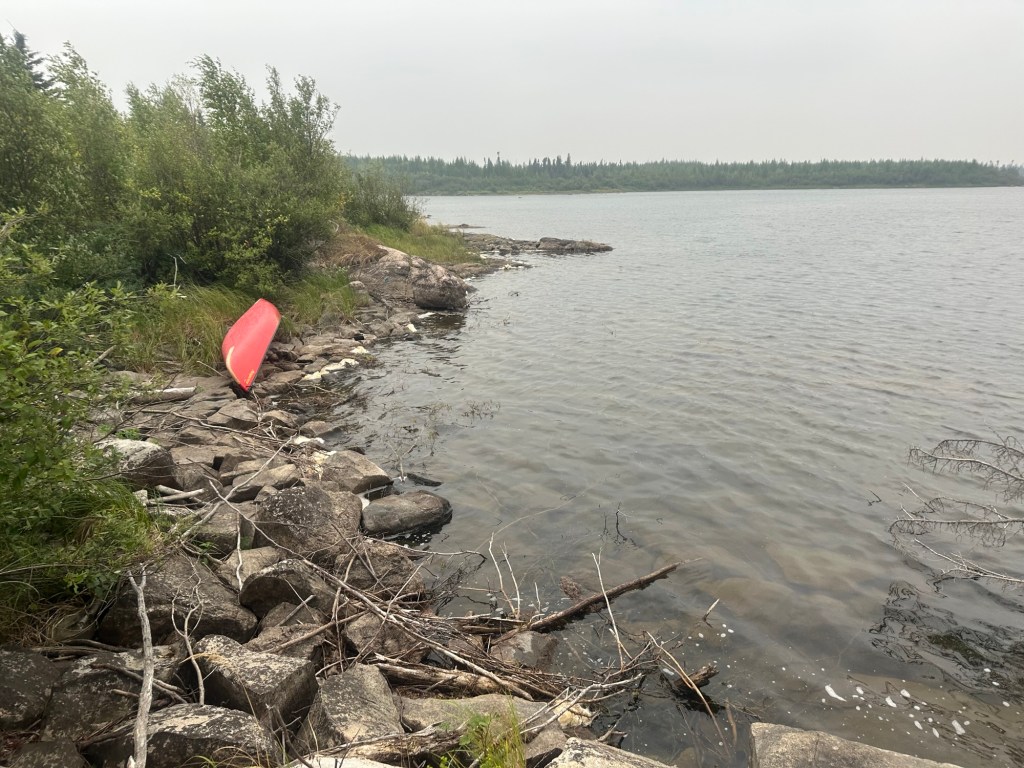
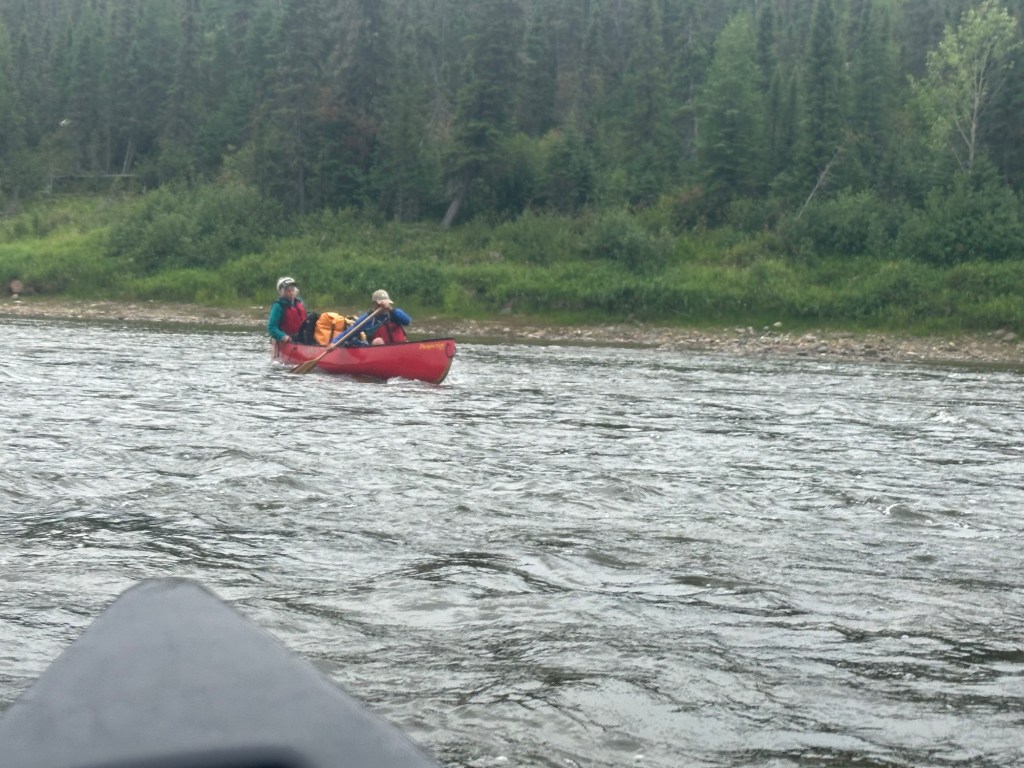
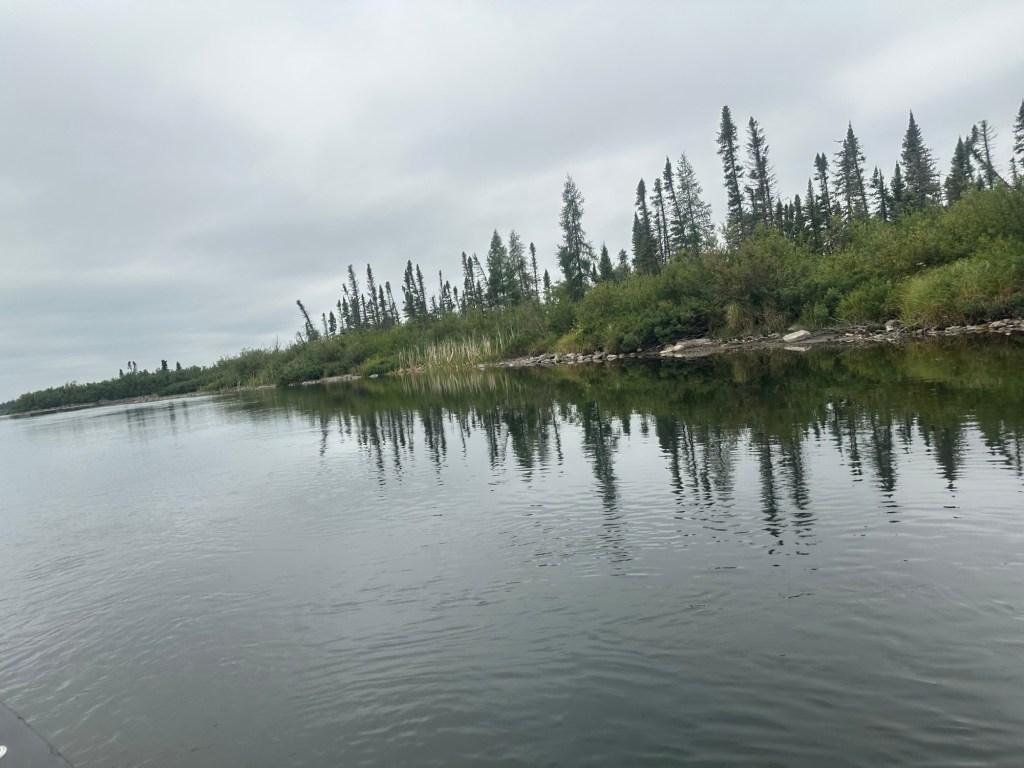
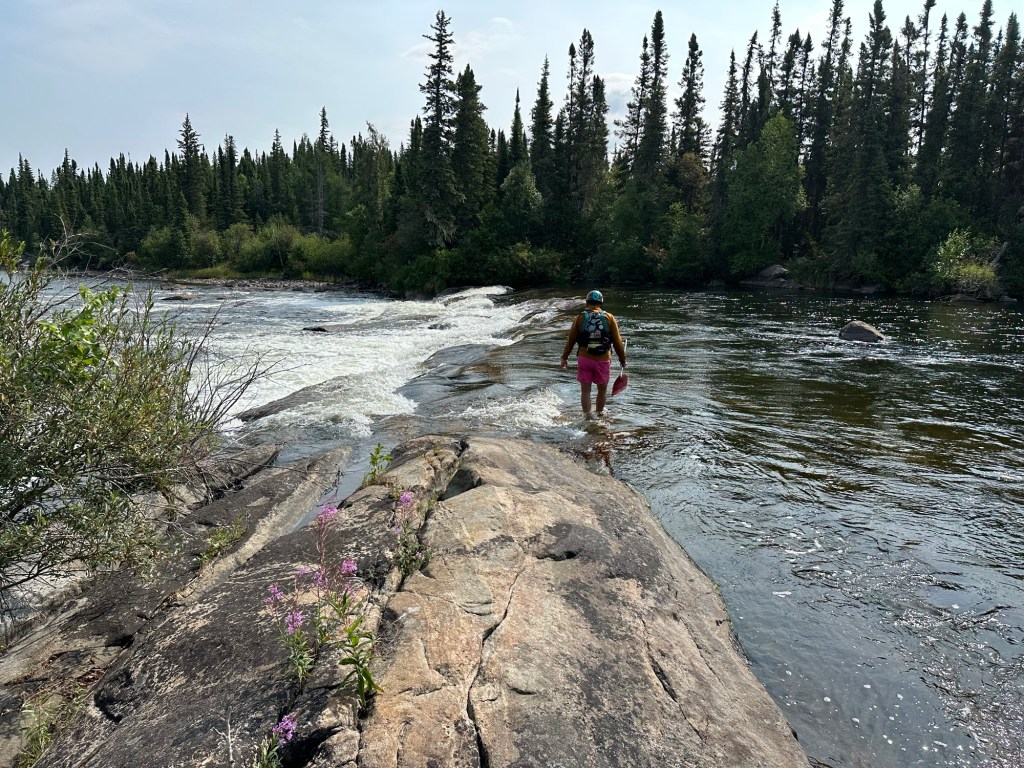
To Gillum

August 16, 2025 Day 13

We got the good news that Clint and Griz would make it in on their super fast boat that will carry us, our canoes, and gear to a pickup point on the Nelson River. We can’t boat all the way to Gillum because Manitoba Hydro, the electric company, has a long series of dams and they frequently withhold water. This leads to low water for river travel and many exposed rocks and boulders. This causes the company to be in disfavor with some of the citizens of this province. One of there tactics is to hold back water. This is not my country, so I get to remain apolitical. Which is a sweet position to be in. For the people who need to make plans around the water level it’s tricky. Luckily we’re only one day late on our target arrival. Apparently Clint is a strategic genius.

We ready ourselves for escape. We still have some oatmeal for breakfast and we gather snacks for lunch. This is an unexpected additional day and the pickings are slim. We all learned, we can go with less.

Until 4:00 PM, we are left with the incredible green, green pastures of York Factory. They lay before us, beckoning. This is not a party, but rather a Saturday in the park. Polar bears?Where? None of us consider them. Everybody is laidback and peaceful. Our York Factory Family joins us. Little do we know that when our boat arrives, we’re back on a time schedule.

Beautiful grounds
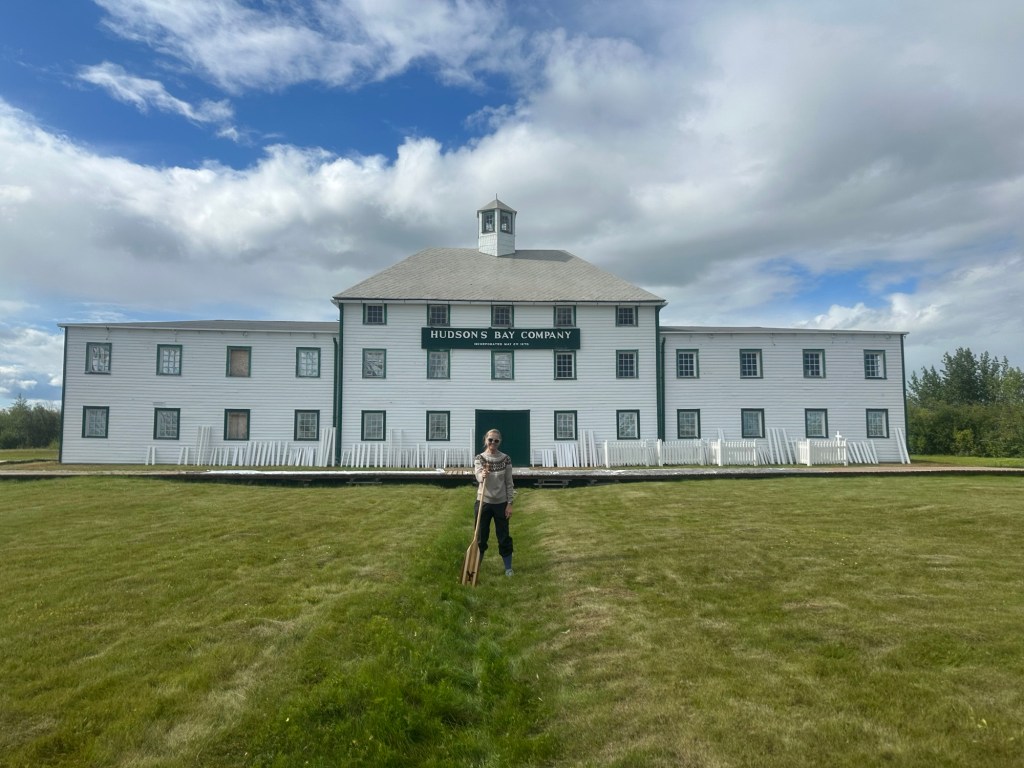
The group waiting for the boat with our favorite souvenir Branded Paddles
The Y and the F

The boat is spotted. It only takes 20 minutes to load the boat with 11 people, four canoes and all our gear.
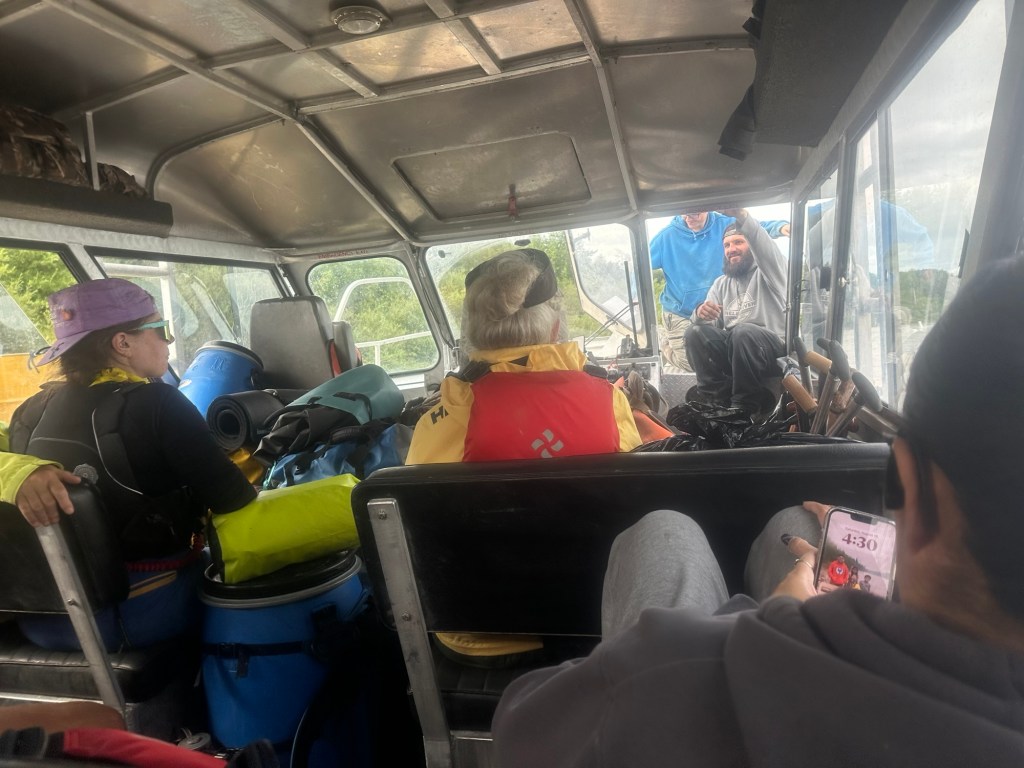
There are windows on the boat, but they don’t remain closed. I was glad to be wearing my PFD. Not only for protection, but also warmth.

Engines started, two huge roaring suckers. Hold on to your seats. We hammered over huge waves. The day was then all pewter, both the sky and water. It was dang cold. About half way into our four hour ride, HOLY CRAP as if to greet us, there, just off port was this huge polar bear. He made a dismissive growl. Instantly all my bravado about not thinking about polar bears was erased. Fear takes its proper space in me. All along this creature was lurking.

Majestic
So glad to see him from the safety of the boat and not the canoe

Our boat continued on the Nelson River albeit calmer than the Hudson Bay, but still pewter cold. Our guide, Garrett, spotted the van backed down a hill waiting for us. Our pilot cut the boat’s engine and in short order we were handing our canoes and gear down, boarding the canoes and paddling over and around boulders.

We drove up the dirt road and made a left onto a gravel road. Daryl, our driver, asked if anyone remembered the murder case from 2019. The Canadians remembered. It involved three murders in British Columbia. A couple and a professor were murdered. The crimes were miles apart and unrelated and considered random. The killers were male, one was 18, and the other 19. There was a huge manhunt that brought the investigation to Manitoba. It turns out, one of the guys we met at York Factory, was at the corner where we just made the left. He spotted a huge murder of crows. (A murder of crows is what you call a flock of crows). This murder led the way to the murderers who had shot themselves.

I think this puts animals, such as the polar bears, in there proper perspective. They don’t commit senseless acts of murder.

It was a two hour drive to Gillum. We would be staying in the park there. They had a big event going on where it was possible to win $78,000. So people were in town. We pitched our tents on the dewy grass. It was a cold night. We had no public toilets.

Griz will pick us up driving the same van with our stuff already loaded. At 4:00 AM the train will come in and wake us with their half hour of screeching noises. How quaint is that?

On a sad note . .

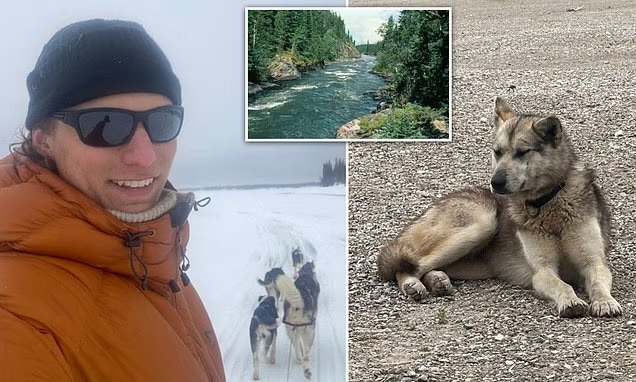
Missing Norwegian trekker found dead near York Factory in northern Manitoba. Skjottelvik left Fort Severn, Ontario. He had been on foot since July 25 with two dogs and planned to arrive in York Factory, Manitoba on Aug. 15 — a distance of more than 300 kilometres along the shore of Hudson Bay. He didn’t show up, but one of his dogs did, police said.
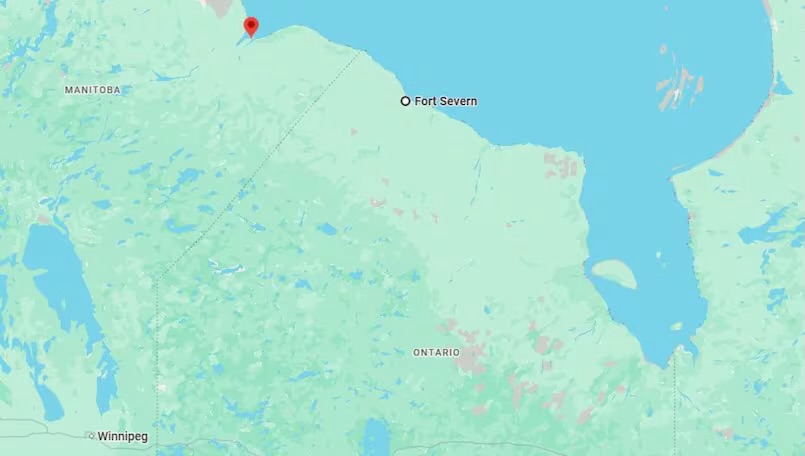
Police believe the man was swept away while attempting to cross the Hayes River on his way to York Factory, and they said the man’s body was discovered just to the south, near where his parka washed up on shore Friday. 

The ground in the area where the search took place is boggy and so soft at points that people would often sink to their knees or waist while trying to travel on it. 

The area along the Hudson Bay shoreline is also known to be populated by polar bears and wolves, and to have fluctuating water levels because of the tide coming in and going out from Hudson Bay.
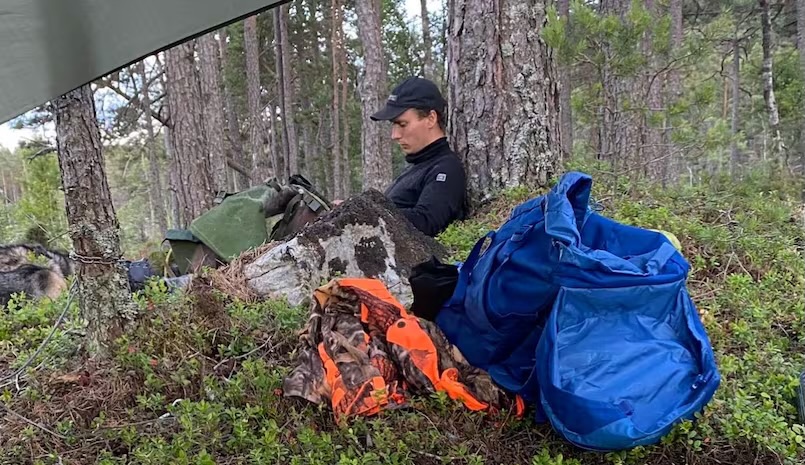
Anne and I speculate that our group probably crossed paths with him as we were coming into York Factory. Anne had heard that the other dog made it back to Severn Ontario a distance of 300 kilometers.

Wolf prints
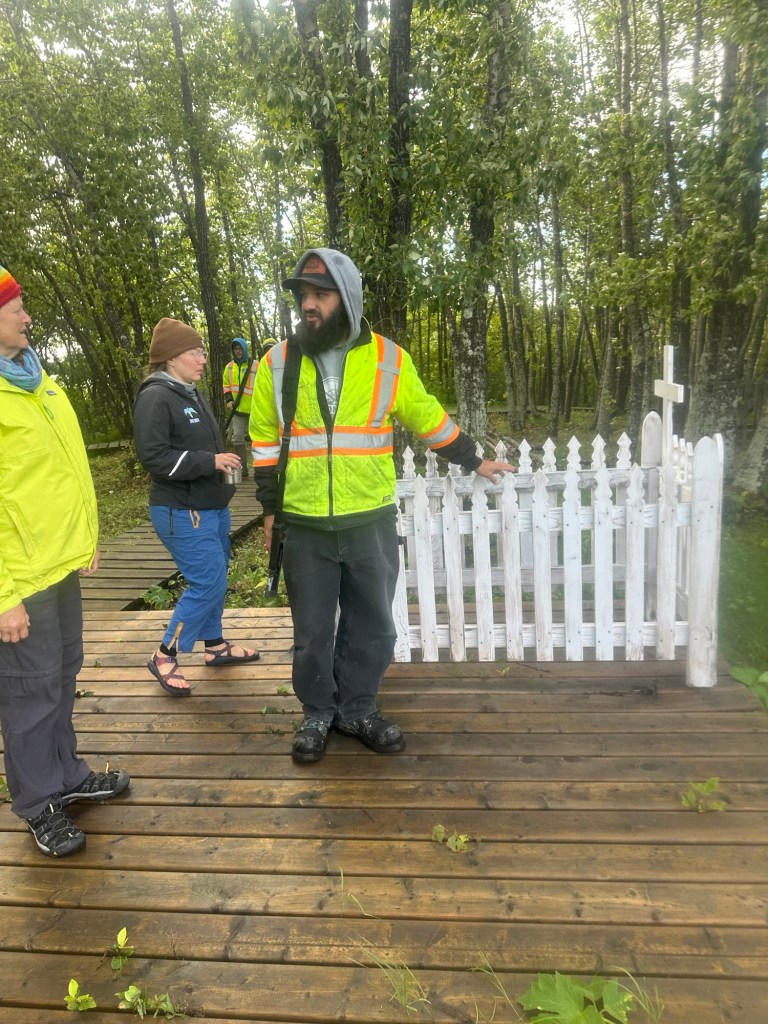
The Day After

Friday, August 15, 2025 Day 12

I woke up happy to be alive. I was in a warm bed. And, more importantly, I remembered it was a bunk bed. I didn’t forget that the top bed was precariously close to my body, so I would need to roll out of bed. Twelve consecutive nights of different campsites and I woke up each morning remembering where I was. The night I got home and was in bed with my husband, I was confused about him and the whole situation.

The room was quiet all night. Maybe because I was dead to the world. At this point, we had nothing to fear. There were eight of us and maybe eight more workers in the next bunk house. Several workers had shot guns. Garrett had a shot gun. We were inside an electrified fence. We hadn’t seen a polar bear or signs of one. Nevertheless, we were told to stick together with someone carrying a gun.

I had read a steady stream of polar bear vs man stories in preparation for this trip. I should have been comforted that none of the stories were polar bear vs woman.

I should have read woman vs nature stories. Or woman surviving drowning stories. When I think of drowning, I remind myself that this is the most common cause of death in the wilderness.

Seriously, how do you prepare for this? My first concern was how long can I hold my breath? It’s less than 30 seconds. So I practiced holding my breath. My mind and lungs were convinced I was suffering from anoxia after 45 seconds, so I had to breathe. They say drowning is a peaceful way to die, but the panicking is horrible.

Lying peacefully in the warm down sleeping bag Josh had given me, I recalled yesterday. What happened? High seas. Big waves. Cold wet conditions. Forty to fifty MPH winds. We paddled furiously for one hour. Relentless exertion.

Once safe on land, the group never talked about it. I had no nightmares. Yet I knew it wouldn’t have taken much to overturn our boats. Any one of those waves could have landed the wrong way. But all of us knew the risks.

The employees who were so good to us came by in the morning. I asked about the howling. They said it was a dog who had showed up. They sent the dog’s picture to the girlfriend of the Norwegian trekker thinking that was the only possibility. Where would another dog come from? She corroborated that he was Togo one of the two dogs he was traveling with since he left Severn, Ontario.

The trekker must be near. It seemed so unbelievable that he could make it, when he was hiking this impassable beach route. All of us were so excited to meet him. We wanted to see the reunion of man and dog.

The famous boat captain, Clint and his sidekick, Griz as expected were unable to get into York Factory until tomorrow. He was facing 60 mph winds. One perk for us was that it gave the trekker another day to get into York Factory.

Graveyard restoration
Inside the factory
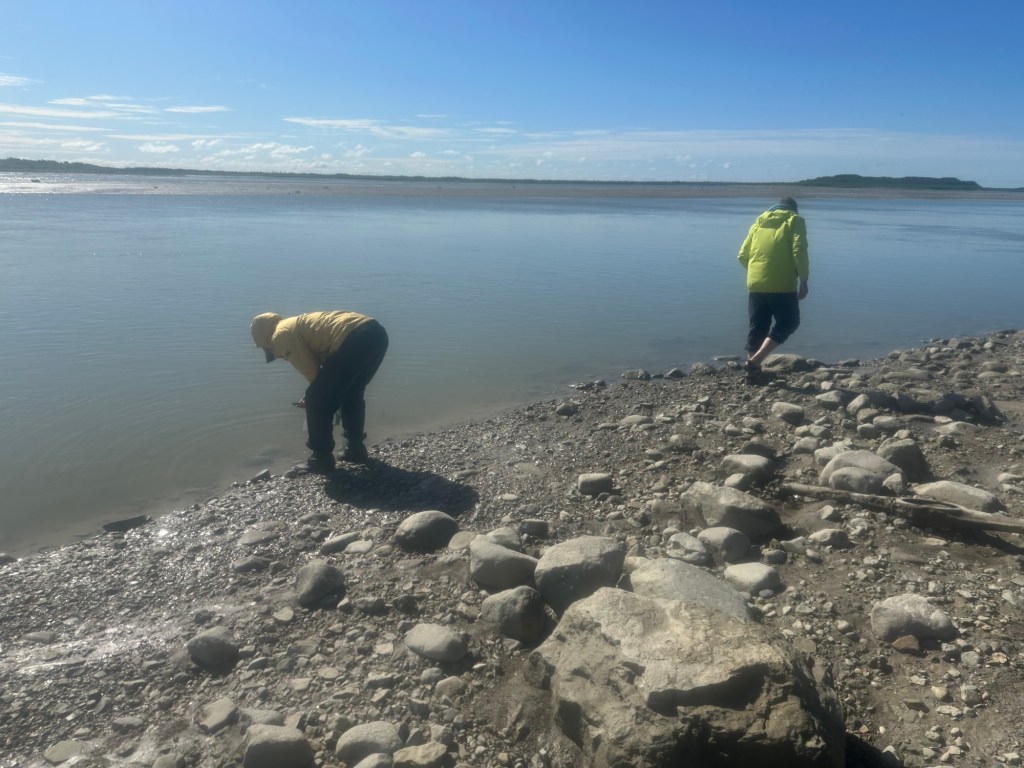
Beach combing

This day turned out nice. Sunny and pretty. We had the tour of the grave yard that was being restored, making sure the bodies were correctly labeled and buried. Then we had the grand tour of factory. A large building with many iterations over the years. And now they are trying to restore it keeping historic significance at the forefront. With the tide out, we were able to beach comb. We could take our findings home.

It was hard for me to enthusiastically take these artifacts when I spend so much time getting rid of possessions. To my sons: Don’t fight over these.

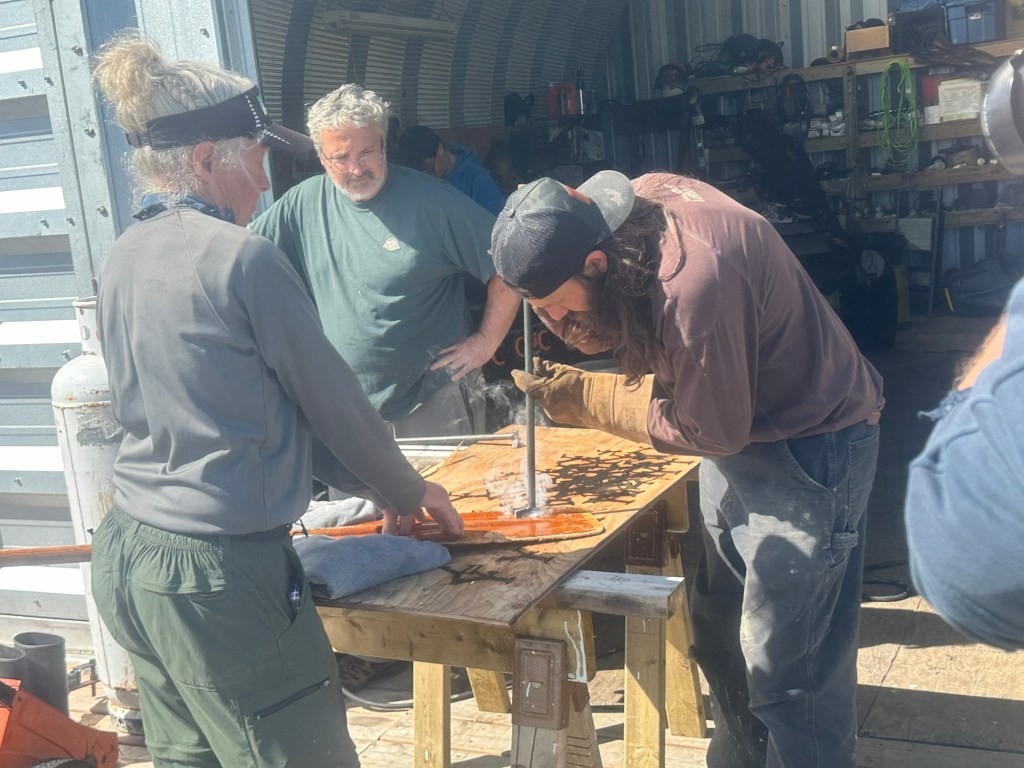
We had an opportunity to have our paddles branded, with the historic York Factory brand. I thought that was nice.

Branding
So you’re supposed to hang it in your house. No one I know will have an idea of the significance of York Factory. This is Canadian history.

As we were loving the super nice weather and keeping an eye on the beach in hopes the Norwegian and his dog arrive, a helicopter started to fly overhead.

They were called to start a search for the missing hiker and his dog. We were all saddened but hopeful.

Hello York Factory: Goodbye Hayes River

Thursday August 14, 2025 Day 11

In my morning tent, I punched my clothes into the dry bag dedicated to them. I could barely fit that one last wet item into my small bag. It was like baking bread—punch it down, squeeze the air out of the bag. As I dissembled the tent for the eleventh time, I had a wishful moment. I considered this might be my last time in this big, beautiful, blue tent.

I was down to my last unused set of underwear. I reapplied my damp long underwear. My quick-dry pants and pullover hoodie shirt were entering their 11th day of wear. Before we started the day’s paddle, I packed my even smaller, quick-access bag with my favorite puffy. The rest are the clothes that I would continue to need and wear. And they will continue to be on me until we arrive in Winnipeg on the late afternoon of August 17th. Fourteen days of no shower and no clean clothes. Who could ask for anything more?
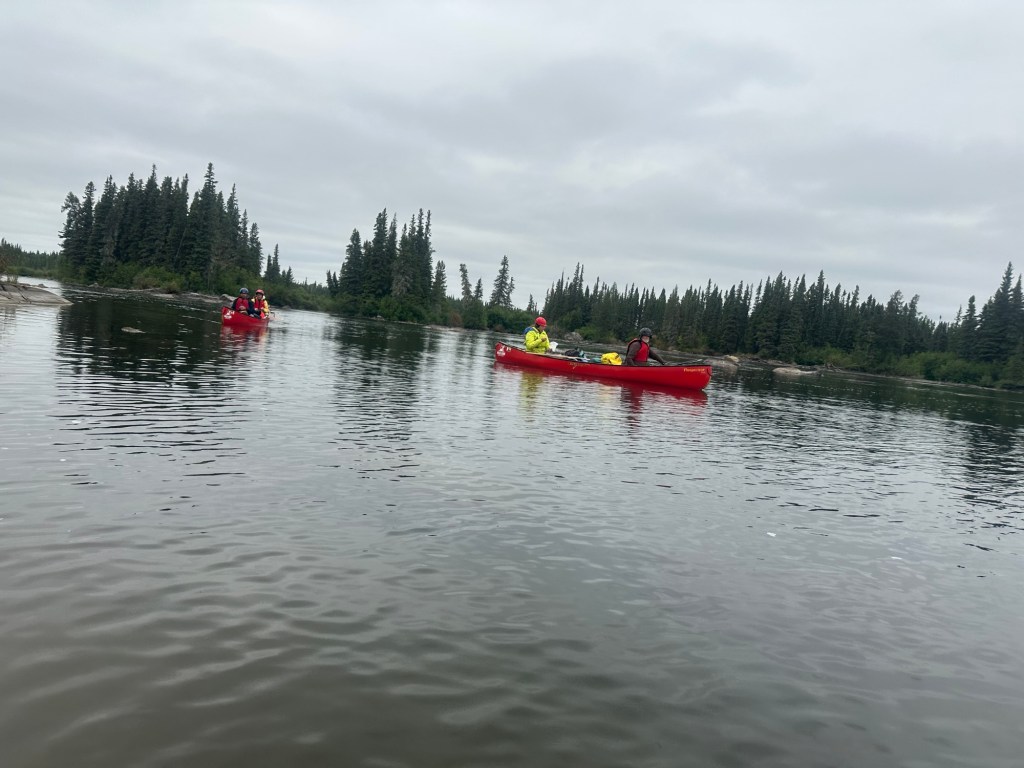
Our night at Polar Bear ready obviously worked. We were all alive and ready to head farther into the heart of darkness. This just doesn’t seem like polar bear territory. We headed deeper into the boreal forest or taiga. But I pictured polar bears on the tundra, floating on an iceberg of which there are none. However, I don’t want to be complacent and jinx myself and others.

Our campsites, of late, have been just above gravel bars. The gravel bars were above slick rock. As if a reminder of day two, I once again end up on my tailbone. I jumped up trying to look in full control. All seemed well.

As we got closer to the Hudson Bay, our beautiful trumpeter swans were replaced by tundra swans. Tundra swans don’t trumpet. Trumpeting is amazing. As a mother of a former teenager who actually practiced. I can appreciate what it would be like to have a bevy of student trumpeters.

We speculated that loons would be tundra loons. But fact checking unearthed that these loons were Pacific Loons, the species that populate Elkhorn Slough in the Monterey Bay in the winter near our home there. The loon that is common to the BWCA is the Common Loon.

The boreal forest here is dominated by spruce, trembling aspens and tamarack. Every mile farther north we go, the trees lose height,

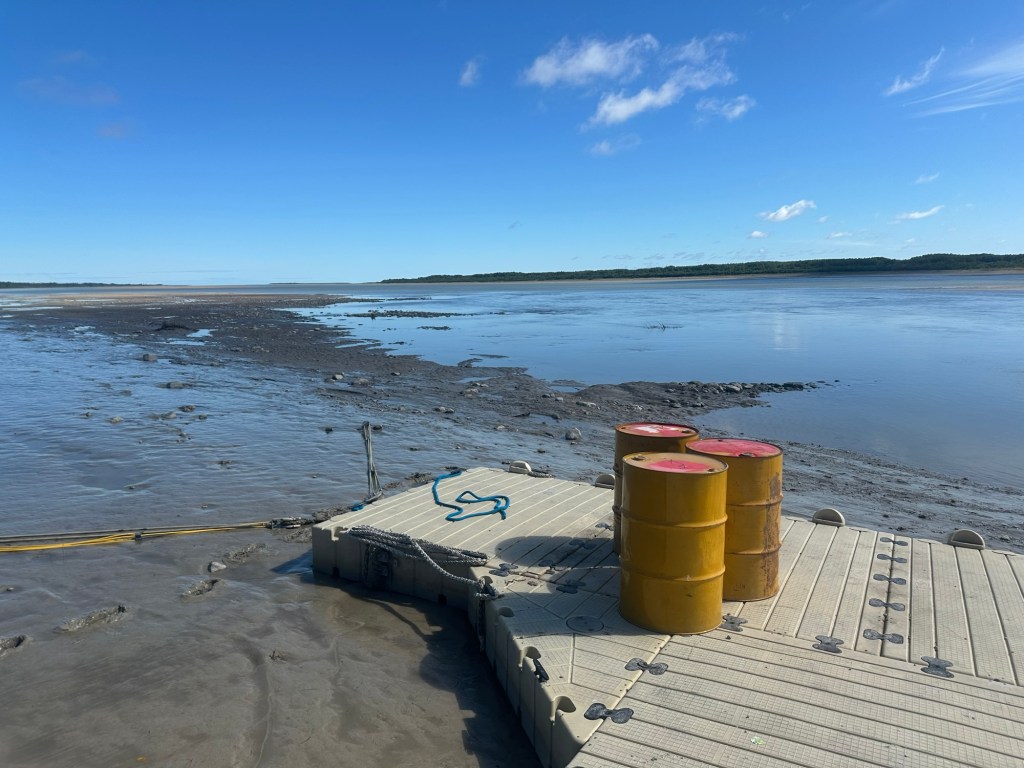
All of us began the day’s journey with the knowledge that we had to complete this section today, or we’d suffer the consequences. There were a number of factors that played into our deadline. One was the tide. We needed to arrive after 4:30. That was high tide. With a 14 foot tide, we didn’t want to come in without water up to the dock.

With the tide out, we’d be in danger of sinking into the muck knee high or higher. And the tide can pull you out.

This was an important consideration, so paddle, paddle, paddle . . .

It started as a good looking day. We had a strong current, some following seas, NO rain and NO wind.

We were surprised by a large mammal rolling in front and then behind us. As it got ever closer, we recognized it as a bearded seal. This saltwater creature reminded us that once we’re on the Hudson Bay that water is connected to the Arctic Ocean.

Sometimes when you’re running with the wind, you cannot see or feel your progress. Your landmarks aren’t profound enough, or you’re not traveling near a shore.

Garrett announced to me and pointed. “See right there, right in front of us that’s the Hudson Bay. We saw it then way in the distance. I could tell it was getting closer. Soon you heard the wind. Waves were building. We headed into a tempest. It was like a williwaw hit us. Blasting us from the front, it wasn’t an ambush, it was a full frontal slap. Wind, waves, rain.

My muscles strained with every stoke. I repeated to myself. “Paddle like you mean it.” The wind was in my face. Icy water. Icy rain. The waves were high. Whitecaps mounted. I felt the enormity of the situation with every stroke.

One hour in, we reached the floating platform dock. I didn’t know how I did it, but I deposited my body on the platform. I flopped up using what felt like flippers. I lay there as sea lion.

I could barely stand up on my sea-legs. We were faced with the task of lugging the boats and all our gear up and up the endless stairway. My body reacted again with uncontrollable shivers. I realized everyone was facing the cold, yet they were helping. Karen told me to get up the stairs behind a row of canoes to try to break the cold wind. Then I spotted a two guys coming toward us on a 4- wheeler. They ushered us to a compound which was encircled by an electrified wire fence. This was polar bear protection.
This was photographed the day after we arrived and after the storm.

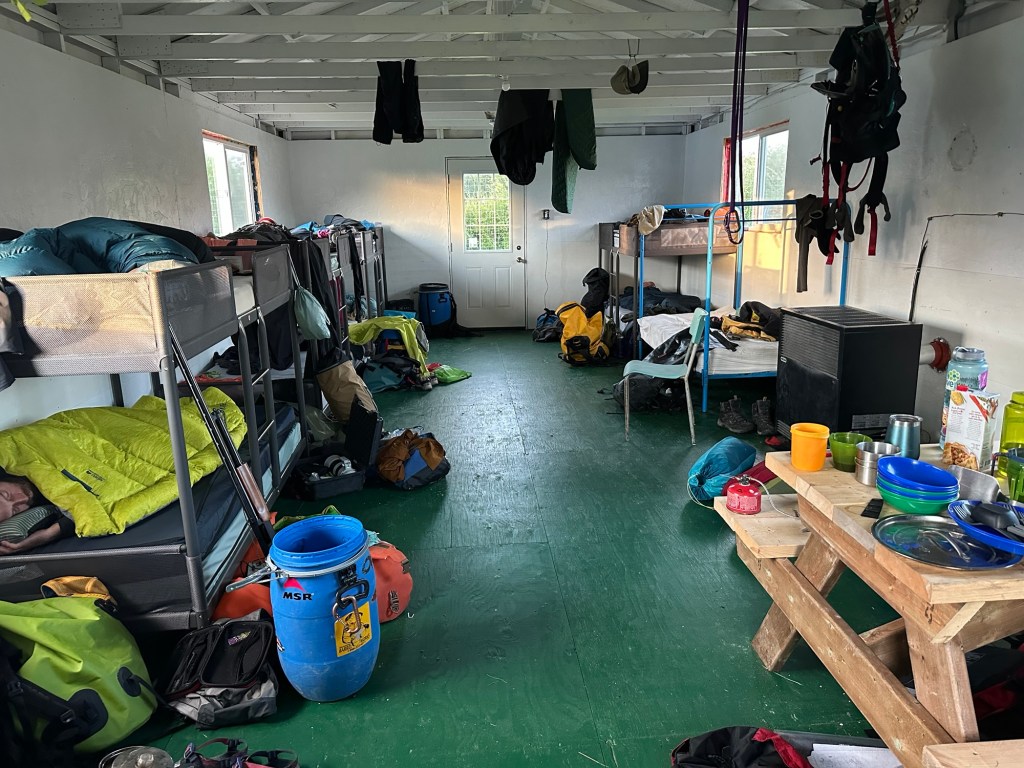
Two bunk houses were inside the confines of the fence. The first house was for the workers who were restoring the items of historical value to York Factory. The other bunkhouse was for people like us who paddle in and need to spend time waiting for a boat or plane to get them back to the start.

Our new digs, 8 bunks, heat, table and chairs, composting toilet outside.
Josh was happy to get me a Down sleeping bag, and his jacket to warm up. GAME CHANGER

They got help to get the stuff up. When they saw us out in the water, they just couldn’t believe we were there in our little canoes. This storm could have made some fine pictures but no one was taking pictures. We were just damn happy to be alive in one piece.

The generosity of the twenty or so people who were living and or working there was amazing. They came to get us, to come for dinner, in a small trailer they pulled behind a 4-wheeler. They were already hosting about 15 people who were eating holding their plates or sitting at tables eating and playing games or music, talking and enjoying the evening. Paul the resident at the house gave me a pair of his sweats because my pants were wet saying, “They won’t fit but they have a draw string. I’ll throw your wet clothes in the dryer.”

How long had it been since I was warm and dry? He started to feed us. Every one could have as many pork chops and/or burgers as they wanted. He served them and kept asking if they wanted more. Finding out I was a vegetarian, he made a cheese platter for me. A young woman came over and sat at my feet. “Your feet are wet. Let me take off your wet socks. I’ll put them in the dryer. Now I’m going to put these warm fuzzy socks on you. Keep them, they are yours.

Throughout the evening we heard talk of the Norwegian who was coming tomorrow. He was trekking with two dogs and was arriving from Severn, Ontario.

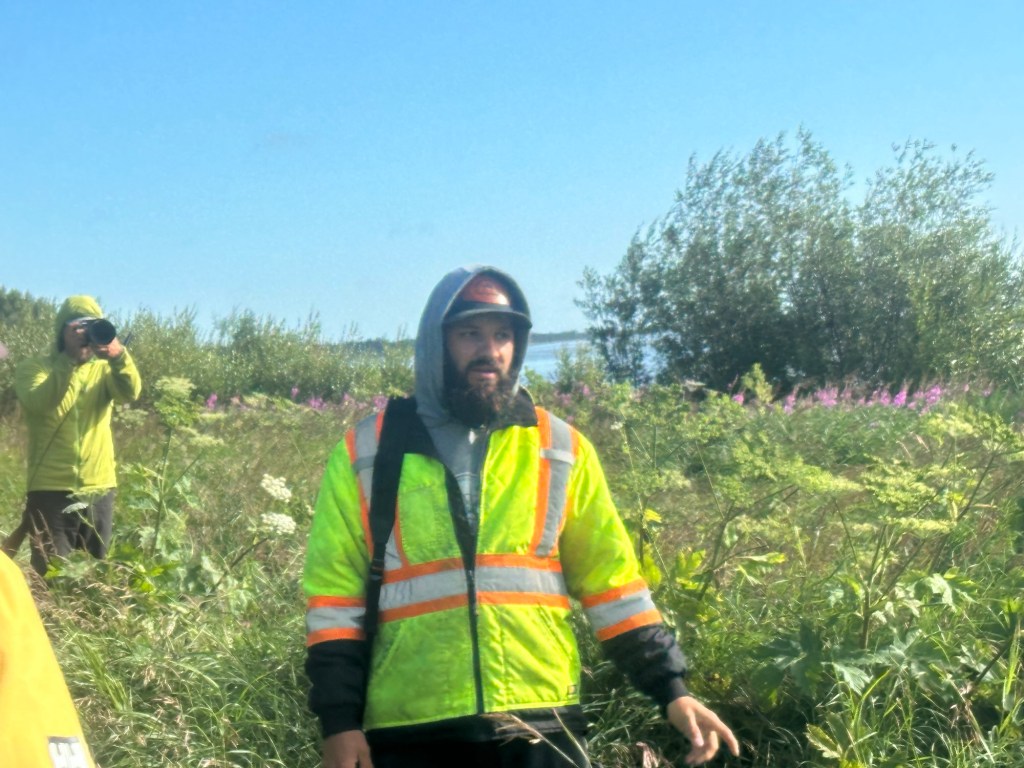
29 year old Steffen Skjottelvik Norwegian trekker.

My bunk bed was a welcome addition to the numbers of creature comforts I had been enjoying since I flopped off the canoe. I woke in the night to the howling of a wolf. I realized it wasn’t a wolf. It must have been a dog.

The Wide Hayes Keeps on Rolling Along

August 13, 2025 Day 10

Wake at 4:00 with little sleep. It’s just too Cold for something as friendly as sleep. The sound of a powerful, angry river would startle me awake.

Once up, our spirits lifted by the appearance of the sun and then waned when a bottom heavy dark cloud passed overhead. We all remained cold encased in wet clothes with no chance of experiencing dry ones. Actually, I had no real reason to complain. We had no wind and no rain. The currents and ripples pushed our broad shouldered river forward. It was the best of all possible worlds.

The average number of people on this river on any given day is three. This quiet unpeopled place at that moment was my best of all possible worlds. No WiFi. No communication from that outside world. No incident light. No mechanical sounds. Everything eight people need in four open canoes.

All alone in the river

We start to get the feel of joining the ocean. Maybe salt water is in the air. Maybe it was the expansiveness of the Hayes River. This will be the last night we share on the Hayes. Tomorrow we’ll be in the Hudson Bay at York Factory.

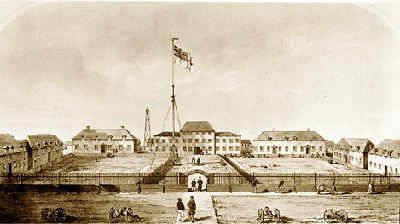
York Factory is a Canadian National Historic Site that was a settlement and Hudson’s Bay Company (HBC) factory (trading post) on the southwestern shore of Hudson Bay in northeastern Manitoba, Canada, at the mouth of the Hayes River, approximately 200 kilometres (120 miles) south-southeast of Churchill.

York Factory 1853
York Factory today 2025

When Anne and I had talked before the trip, she said she was sure we’d see polar bears. I’ve been on many backpacking trips when I thought a lot about bears black and grisly. And mountain lions that we caught on our game cam and that killed our neighbor’s dog right in front of them. I could be pretty jumpy about bears and mountain lions.

On this trip maybe I had been too tired at night. Or maybe it was because we spent more time on the shore than the woods. But now that I’ve worried for months about polar bears and we are officially in their territory, it’s the last thing on my mind.

I still have the wind and rain to fret over. People in the wilderness don’t die of animal attacks. They die of their own stupidity. Drowning and falling.

Before we set up camp, Garrett fired a Bear Banger and shot his shotgun across the rivers. We were instructed that morning not to use anything scented. And to put all scented items in a barrel. We had to erect our tents in a row with a few feet between them.

I slept fine. I got up in the night to pee and never looked for the white bear.

The Low Land

8/12/2025 Day 9

This is the Peak of the Perseid meteor shower. This whole trip, we’ve had a lot of ambient night light. I have no idea why. This morning I woke to pee during a brief period of reprieve from rain. The moon was rising and all was silent and breathtaking. No bear worries. No snoring. I felt this was a harbinger of our trip’s end.

And then, the rain picked up outside the tent. The wind gusted at top speed. We were supposed to get an early start. This drove me deep into my sleeping bag.

Today we no longer need our helmets. Busy, roiling, rocky waters are behind us. We only have three more days and a lot of ground to cover. If we miss our rendezvous with the fast boat, we won’t be able to leave for 5 more days. At 6:00 AM the rain stopped. Folks left their storm shelter and streamed (all eight of us) to breakfast.

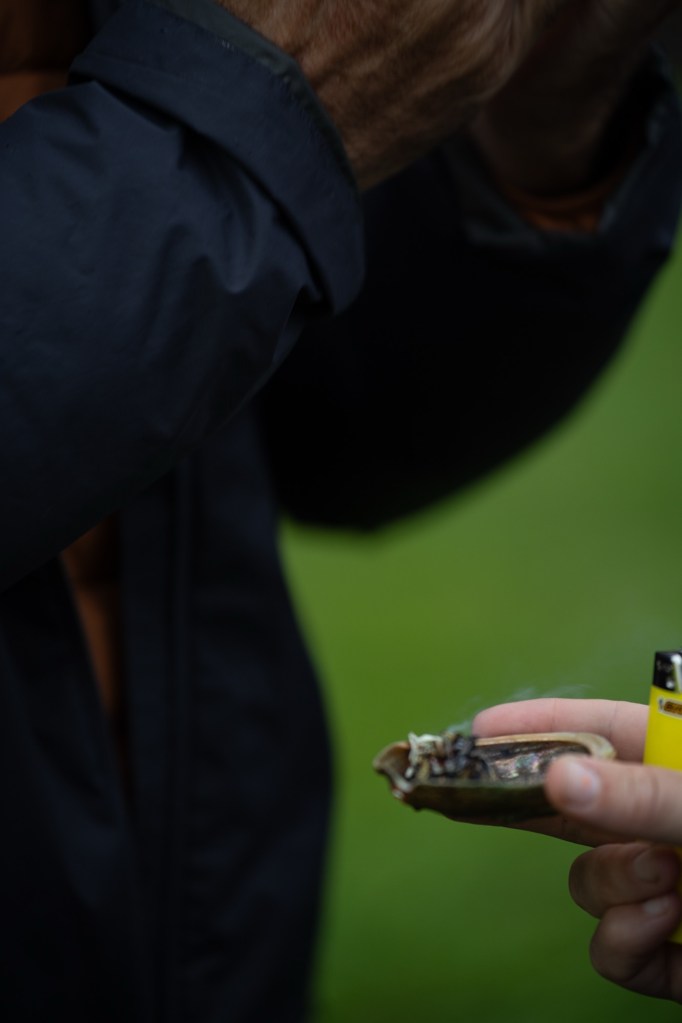
Smudging for strength

We were in the water by 8:00. The wind was incredible. The temperature was in the single digits. Rain resumed. We pulled over periodically for a break. Pulling the paddle against the wind is grueling. Pain builds, stabbing the neck. Oh god, I need a shower!

I need a tooth brush! I lost mine again. Lord have mercy on my soul! Really, come on!

Group warm-up

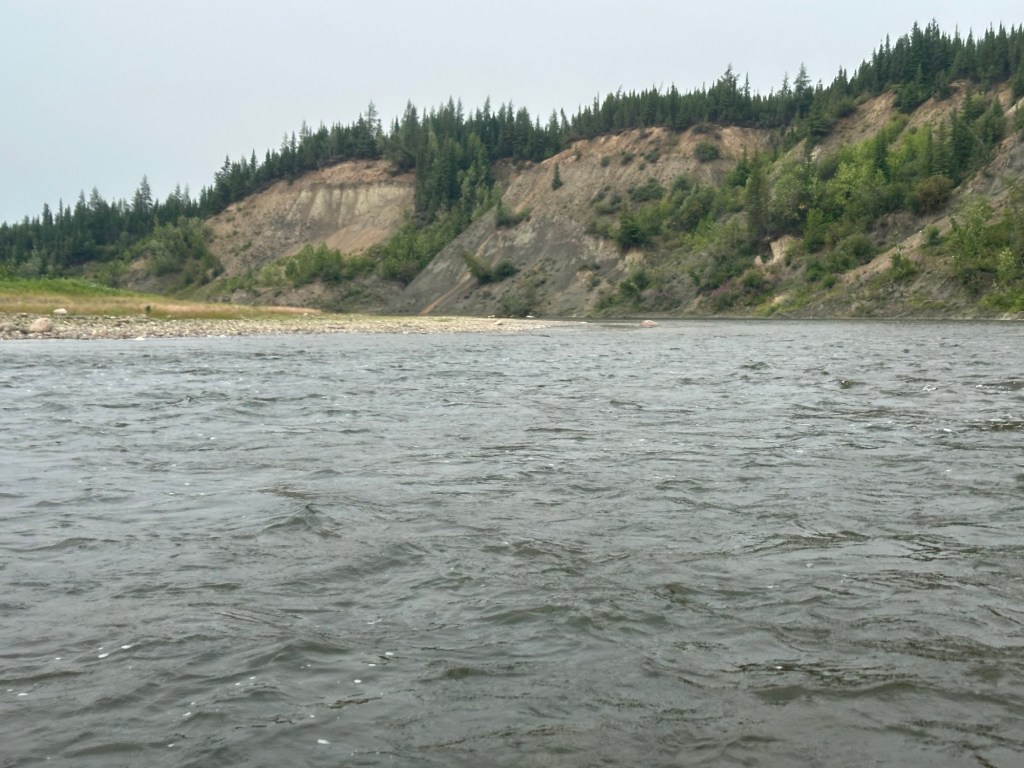
Shortly into the morning, the Fox River flows into the Hayes. Our width expands and the current picks up speed.

We’re supposed to go 60K today, but we’ll end up with only 40 because the group is in despair. We left the action of the rapids for the the action of freezing to death. Bully for us!

Just after lunch, the God River flows into the Hayes. Our broad shoulders plow toward Hudson Bay.

The Hudson Bay is a large body of saltwater in northeastern Canada, covering an area of about 475,000 square miles. It is named after explorer Henry Hudson, who mapped its eastern coast in 1610, and is considered part of the Arctic Ocean. This is the size of three Californias.

We later find from Garrett’s wife’s message that the winds were gusting to 60K.

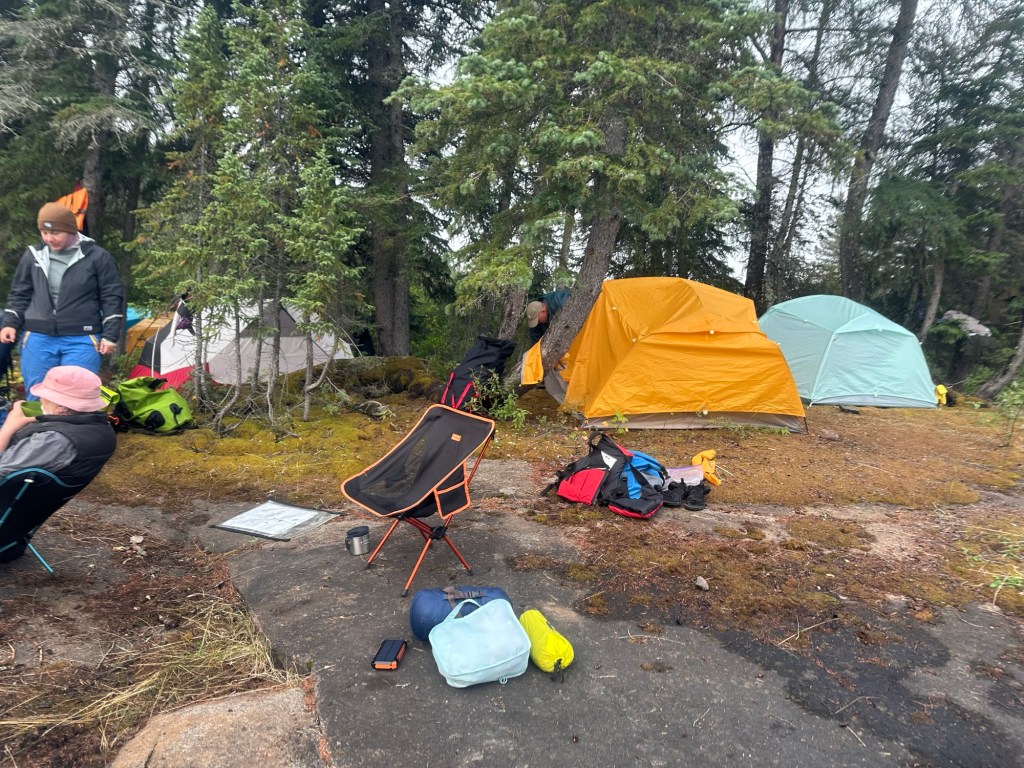
We found a gravel bar to pull up in. There were thickets of brush and grasses, and other various tangles which we needed to effectively tromp down to and pitch our tents. All the dense lowland growth, leave little room for big creatures and the big foot print they need for all the stuff they drag along. Humans. The trampled down path is impassible. The ingress and egress is less functional. I’m stuck. No leaving without taking your tent down first.

Time for the polar bear rules. Most assuredly we won’t see a polar bear here. But staring tomorrow, we never travel alone.

Leaving the Rapids Behind

August 11/2025. Day 8

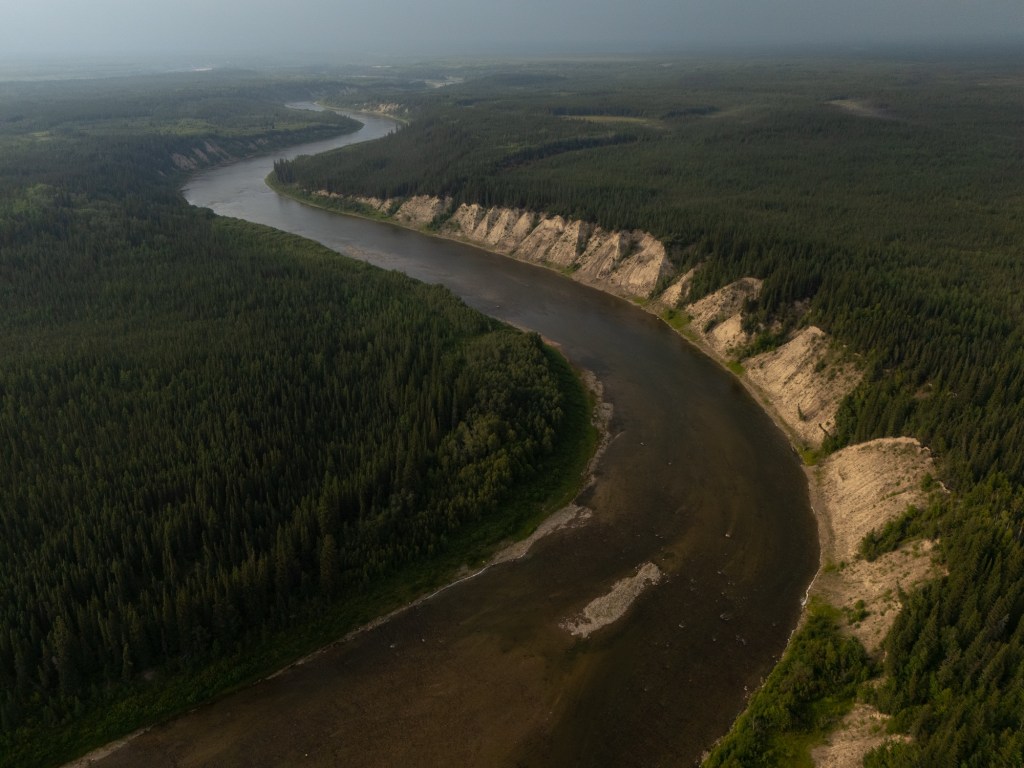
We head into the lowlands with no helmets or rapids to contend with. We have miles and miles of eskers: stratified sand hills formed within ice-walled tunnels by streams that flowed within and under glaciers.

Eskers from the boat view
Eskers from a drone view

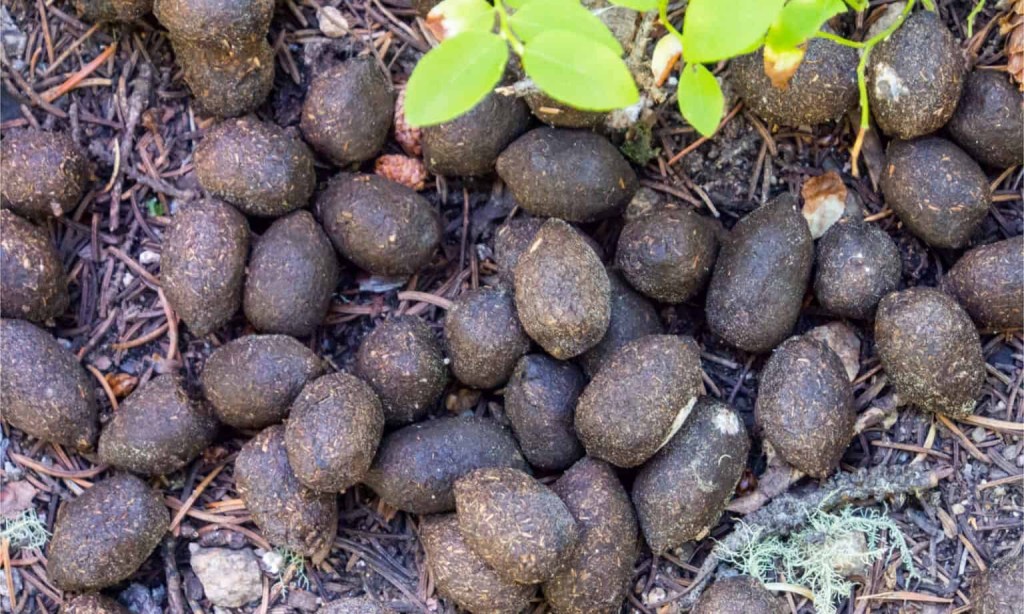
By the end of the day, we’ll have paddled 50K. Our longest paddle. After paddling for hours, those eskers have turned to the sandy beaches with tall grasses. The paddlers on one canoe saw a wolverine. Something I hanker to see. Wolf and moose tracks are fresh but not a peek of either animal. There are so many piles of moose poop, we sleep on it and sit on it.

Just like big deer scat

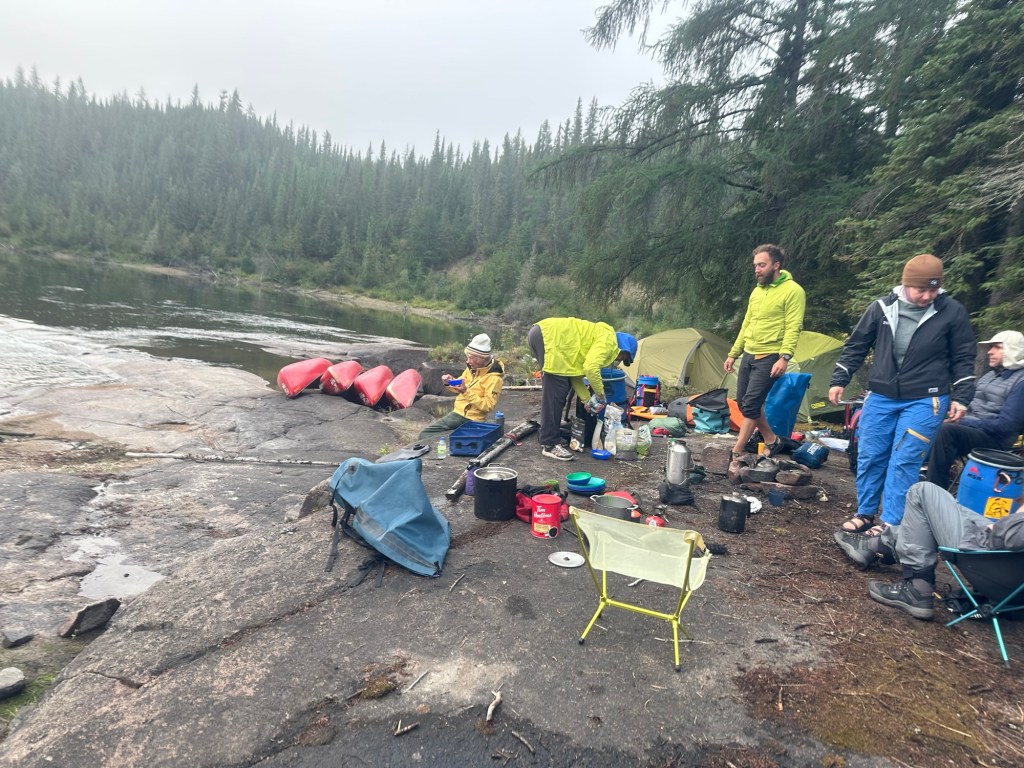
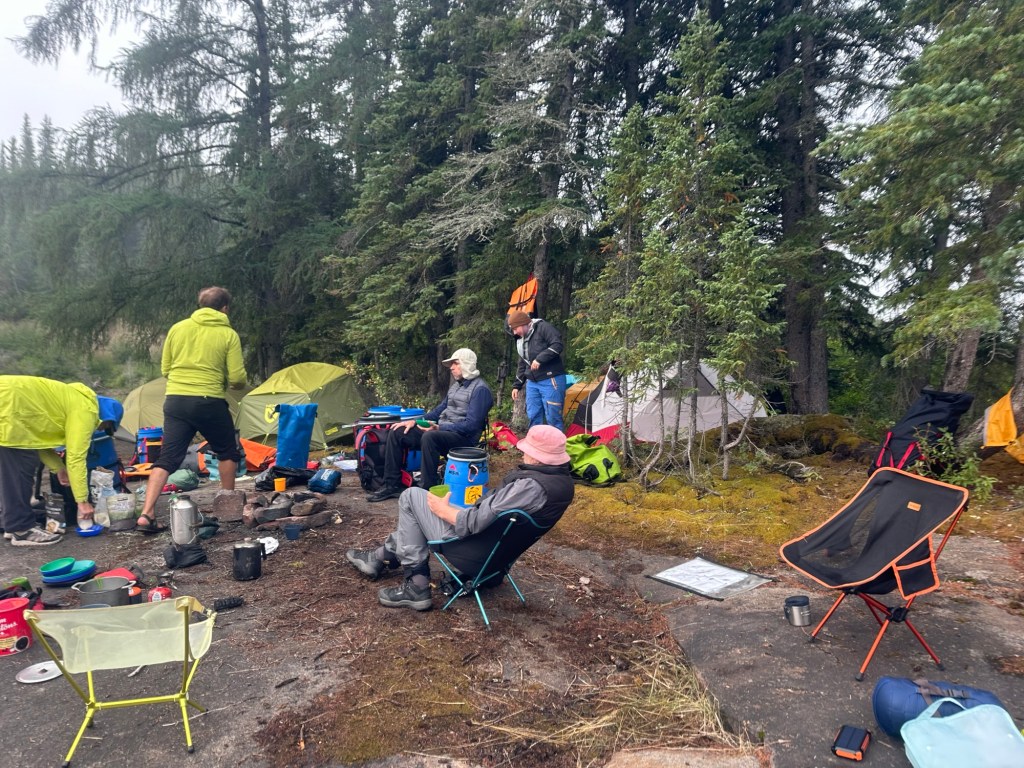
We see ducks pulling the broken wing fake to distract predators from their ducklings. Bald eagles sit high overhead. This day we saw a quick break in the clouds, but the smoke returned and a black cloud followed us to our camp. After trampling down the tall grasses to capture a small plot for our tents, our amazing guides had yet another delicious meal waiting so we could eat before the bottom heavy cloud opened, just as we were finishing washing the last dish.

What a day. We go to bed with full bellies and tired muscles.


The German’s Boat

8/11/2015 Day 8

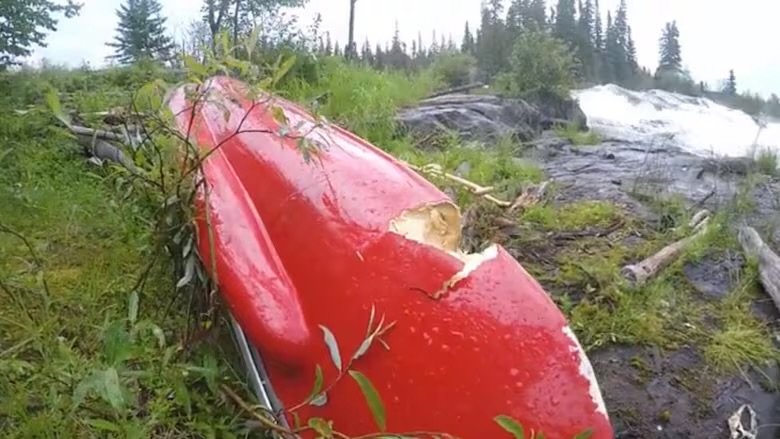
This is a story I planned to tell earlier when we found the canoe and learned about its story.

A Mickey Mouse boat for the Hayes

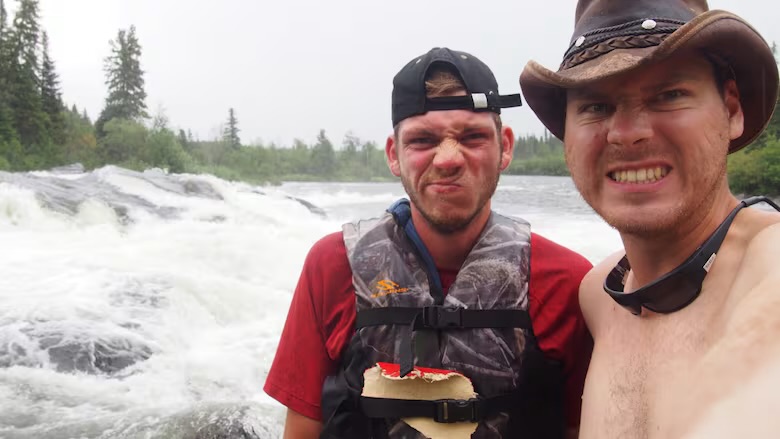
In 2017, two German friends decided to buy a canoe online and paddle the Hayes River. They picked up the canoe at the Winnipeg Airport. They were flying in from Germany uncertain of what they had purchased and clueless about what they needed for such a adventure. The seller ended up driving them and the canoe to Norway House, the start of the trip. After paddling more than 200 miles. They crashed their canoe on a rock and destroyed it.

They would have to self rescue, so were forced to trek about 100 miles to the nearest highway outside of the town of Gillam, Manitoba.

Wolf Wagner, 25, and John Hoentsch, 26, spent 11 days slogging through boggy terrain with no means of communication to ask for help.

There were no trails just bogs and muskeg.

The two swam through rivers three or four times a day on their hike.

They became uncertain they would survive.

They were barraged by insects, muck, hunger and doubt. Yet eleven days later, they reached Gillam.

Healthy and safe

Shiver, Shiver, How Cold Can You Get?

August 10, 2025 Day 7

I wake in the sate of Damp. Pooling water in the tent means wet clothes. I took my clothes and clothes line down sometime during the night. Correctly thinking the misty conditions will make things worse. It’s hard to stake the tent out if there is no lo room. Hence, the corner with my clothes . . .

4:30 AM Good Morning! I guess we’re all in the same condition. At least my sleeping bag remains dry. My sleeping outfit is dry. That includes my base layer, sweater, wool socks, tuque. My sleeping pad hasn’t been dry for days. I cover my head delaying the inevitable.

I start the chili day with asking my body to warm and dry my wet outfit. I spit in the eye of human comfort. At least it’s not raining. Padding makes me comfortable. By 11:00 AM and three hours of paddling, we stop for a break. In three minutes I’m shivering uncontrollably. I can’t stop.

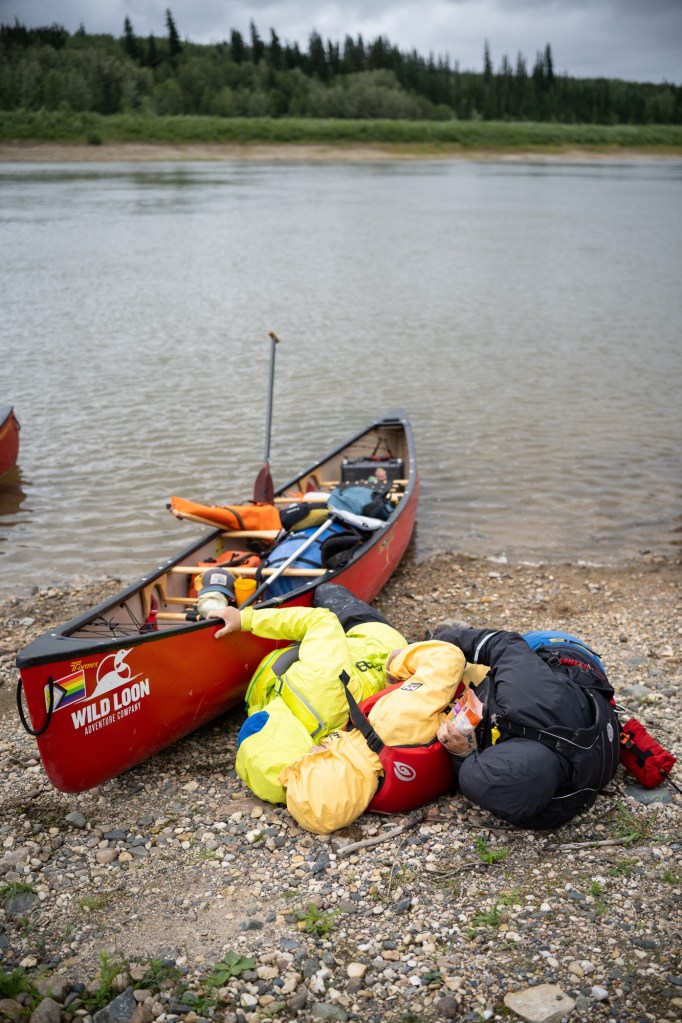
Garrett gives me a cup of hot tea and makes me drink it. Warm from the inside first. Shortly back in the canoes again, Anne and Gord suggested we eat lunch. Lunch is snack food that we stand over and ravenously grab. I’m not an aggressive eater. So I circled to stay warm- buzzard style.

Eskers mark one of the physical features of our Journey
Moving fast

The day is gray and foggy. We’d been paddling through different microclimates. Coming ever closer to the low-lands. Soon we will start seeing eskers. A long, narrow, steep-sided ridge of coarse sand and gravel deposited by a stream flowing in or under a melting sheet of glacial ice.

We’ve started to see more wildlife on shores. A black bear with two cubs. The heads of otters swimming near. Graceful swans. At one point, we paddle underneath a bald eagle, in Canada, a great eagle. It was perched on a low branch. Clearly honing in on its prey. On seeing us, it effected its best hypnotic stink-eye. Effectively chilling.

That beautiful moss is now infused with moose scat and deep prints. Not once do I consider any of the wild animals a threat. We camp near a waterfall we scout to paddle in the morning. All night the roar of the falls haunts my sleep.

Tomorrow we enter the low lands.

Day of the Dumps

Saturday, August 9, 2025 Day 6

If you had talked to me during the past year, you know my priority was to get white-water paddling training and experience. I couldn’t find any where for lessons near Ely or back in CA. I spent hours watching instructions on YouTube. I understand a lot of the principles and practices of how to maneuver your body and the paddles. It’s like learning to ski by YouTube. For me it’s not only knowing the moves and doing the movements, it’s being fast enough that the movements can make a difference (the right direction difference. Is nice)

As we leave Swampy Lake behind, and are instructed again to always wear our helmets, I get serious. I think we all do. Overall, we’re a pretty serious bunch.

Still calm lazy Ole Swampy

As Swampy Lake narrows, we pick up speed and we’re back to the Hayes. When you don’t know the river or your partner for the day, it’s difficult. We’re in tandem canoes. We have different roles to play. You both will pay the consequences for the other’s mistakes.

I was assuming, correctly, I’d be paddling with Garrett because I’ll always be the weakest and he’ll always be the strongest. I believed because of the wide disparity in our skills, I made his job harder if not more dangerous. My feeling didn’t do much for my ego, but it did a lot for my sense of security.

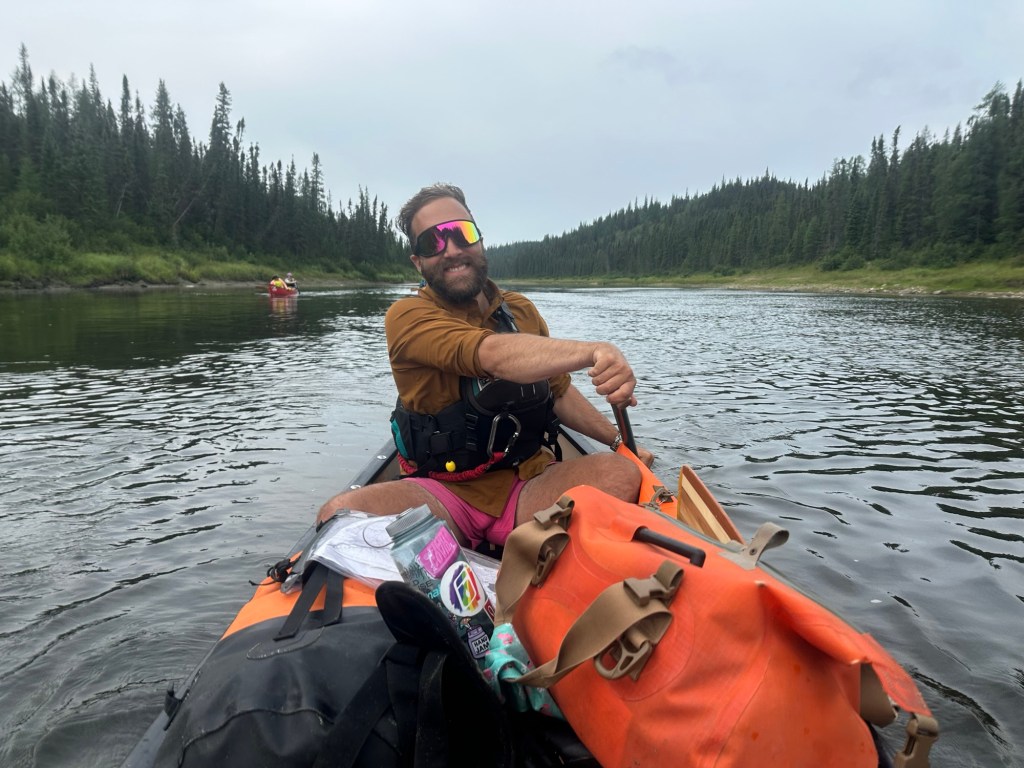
We passed through a number of riffles and swifts adorned with rocks and slabs and boulders. Garrett and I danced around danger. All that was required of me was to paddle. I would silently chant “paddle like you mean it, no hands on gunnel.” When the canoe is squirreling under you, your body heaving one way and boat the opposite way, you automatically grab for something. I mostly extinguished that gunnel-grabbing instinct. At one point I actually did a draw which pulled us to the right of a big rock. Garrett acknowledged it was a good move. But I saw the problem that could arise. If I had been one beat late on taking that draw the boat would turn too late and run into the rock on the right. I felt skittish to try again. There was no debriefing. We were all supposed to be ready for wind, weather and waves.

We continued the pattern of eddying out just after the rapid to turn and watch the others follow each other. The number one problem was getting stuck on a rock requiring the stern paddler to jump out of the back of the canoe and push the boat off the rock from the back. I watched in awe of my fellow paddler’s confidence and ingenuity to tackle their situation. We were carry twelve days of food and gear for eight people. I was reminded this wasn’t training with an empty canoe. This was the real thing, and we were up against a strict deadline.

This waiting and watching takes time. But it’s time we have because this is group travel. Garrett doesn’t give pointers. He praises. And tells them why he chose his route. Of course, this is not a strict science. There are many choices for every run. It couldn’t be thrilling sans the unknown danger.

Coming into view

At one of the tricky runs, the two most experienced paddlers came down last. And in an instant they over turned. A quick blink of the eye and when I looked up all I saw was the bottom of the red canoe up. The male paddler was trying to right the canoe. The female was farther down the river. She started to do the side stroke. And inched over to the shore.

The guy had the pushed the canoe near shore. He and others were putting the gear back in place. Most everything was clipped to the boat and safe. Some miscellaneous items were free. Others paddled down stream to recover the items. Most everything was rescued. We immediately resumed paddling to stay warm.

Garrett was good at doing patchwork portages. He could find a work-around the bigger falls. This time, we dipped the bow of our empty canoe almost straight down off a crack in a narrow ledge. Both of the paddlers grasped the stern leaning back, trying not to drop the canoe while carefully lowering them until they reached the water and slid to rest in a little pocket wedged between the rocks. The paddlers, Garrett and I, demonstrated. Once the boat was perpendicular to the water, yet held by rocks, we scrambled down and hopped in the canoe. We pushed and hopped our hips me pushing paddles on rocks until we dislodged. Garrett pointed us right into the face of the crashing falls. It seemed we were heading for . . . We turned out and road the smooth line down and turn to watch the other three canoes wrestle successfully with this crazy plan.

Success with the crazy plan

After some fun runs, we headed in for a rest. The sun came out, and we appreciated the beauty of this area. Coming in behind a spit of land, we could spot Mount Baldy. At 2,730 feet, it’s the highest point in Manitoba. It looked tall, green, and grassy. A nice feature that would peak at us for the next day. We soaked in the sun promising dry clothes. We were struck with joy. Garrett pointed out we were at the northern most point of the Canadian Shield. And then clouds moved in.

The day continued cold, wet, rain. Just as we were approaching our campsite. The same couple dumped again. It was a quick rescue and hop across the river to a slab of rock just big enough to set up a tight camp. We all hung up wet clothes.

Try to dry out

Cold Night

Friday, August 8, 2025 Day 5

I woke shortly after falling asleep. It was cold. I believed it to be in the high 30s but l had no metrics to prove it. I couldn’t sleep. I got up to Velcro the end vent flaps closed on my tent. I know wisdom says not to zip the side doors shut because it promotes humidity, but I couldn’t tolerate the swirling of frigid fog. So I zipped up.

I broke open some hand and toe warmers, put pants and a sweater over my Smart-wool long underwear, started to wiggle my way into my emergency space blanket, pulled on my bright orange, don’t-shoot-me (worn during hunting season) tuque (Canadian word for stocking cap, and I zipped the sleeping bag over my head. Before I dozed off, I heard what sounded like someone canon-balling into the water. Then I heard it once again, hmmm. And a again. Still, I dozed, but woke briefly to register the ah ha! Those were beavers.

Gear and emergency blanket

Up at 4:00 still warm and ready to journal under my headlamp. This was my time. The same time and hour as at home. Today I worried about wildlife. We had seen nothing. No mammals. I think we were hyper-focused on possible rocks, rapids, fog or smoke.

Peaceful lake
Swampy Lake

If we had something to investigate, it needed to grab our close-up view, like our close bonding with spiders. At night, when we turned the canoes on their sides, spiders crawled under. I’m sure they believed the canoes were something like fallen trees from a derecho. They served their function as Home sweet home for them. Evidently spiders are not forward thinkers. They were still lounging when we overturned the canoes. We paid them no attention. We had a river to run. After settling into our paddling rhythm, some of us started to notice these encampments of arachnids.

I’m sure we were their first close encounter with humans. They looked shy and embarrassed to land in this place they couldn’t comprehend. They gathered in front of my feet. As I paddled, they worked, actually crawled to get off the floor and make progress toward something that looked more like their preferred environment. Grass. Trees. Sand. Anything other than this moving trap. After hours of work, they found themselves still at the bottom, in a deep hole. Oh well, they will be turned over in the canoe tonight.

Hallelujah no smoke. And no instant worries of rapids. We started Swampy Lake aptly named. Without current we were anxious for swifter water. But we could breathe, just breathe.

Anne relaxing

The Hayes The River

Thursday August 7, 2025 Day 4

Smog woke with us, and confirmed we still lived in a gray world. A loon’s lone call echoed in the gray. Is it a portent of a changed day? Although our trip hadn’t been fraught with anguish and danger, it had more than its fair share of discomfort, smoke, drab skies, chilly temperature and damp conditions.

But today, we would become River Runners at the start line. All of us were excited and a bit trepidatious. The loon called again. It was so singular. The air was heavy with an insular stillness. That loon, that one lone loon, held a message for the day. Because we all knew this stillness would be ruffled.

After breakfast each morning, if we chose, we could smudge with the group. Led by Allison, we gathered in a circle with the smoke from sage burning in an abalone shell. It’s an act of peace and calming. It sets a tone. It feels like respect for each other, self, nature.

Next we find a paddle partner for the day. Today I was assigned my partner. It was Garrett which is no surprise to pair the strongest with the weakest. I felt like I dodged a bullet instead of sweating them. I was not alone. One other participant felt insecure with white water and was partnered with the other guide Allison.

An hour or so into the paddle the water narrowed, and we tasted the current. We were in the river, not just any river it was the Hayes River. Lovely, eh? And powered by nature. We felt it.

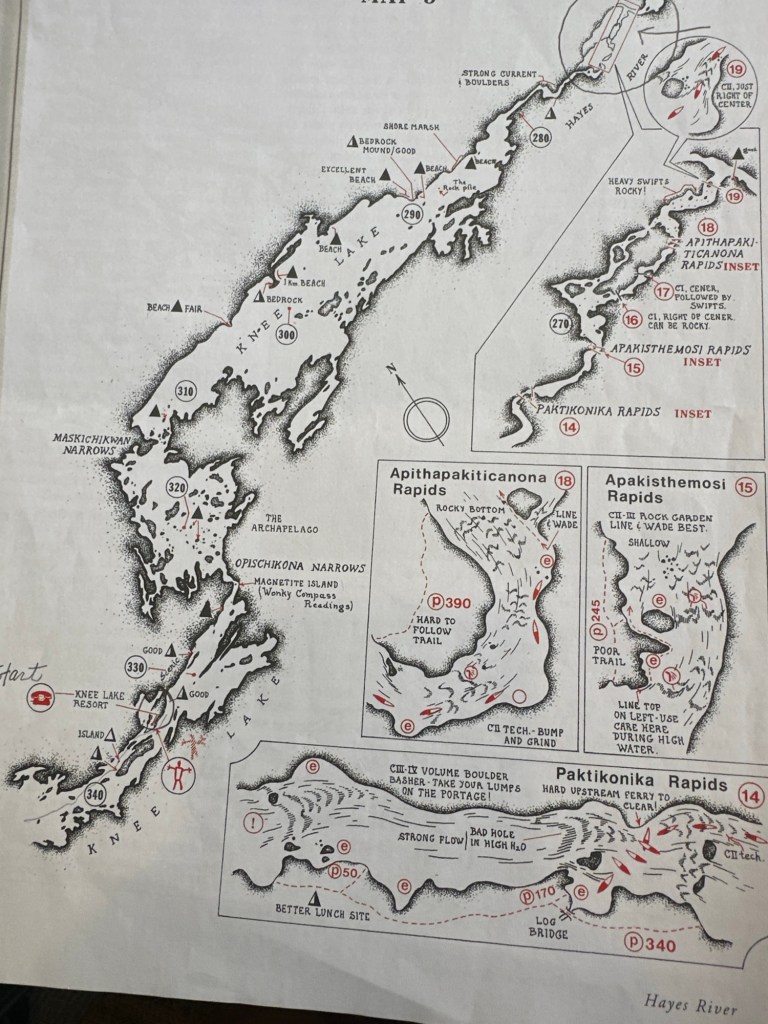
This is a page of my Hap Map

At the top of the page, you can see the box and note the illustrations to the right the 19 features in red where we need to take heed.

Before we reach our initiation point—the point of no return—we break for lunch, a great tension reliever.

I could only speak for myself, but not having a clue of what to expect, builds tension. We were nearing the rapids. As we closed in l could see the edge of the river just dropped. Look like the water rolled straight down. It appeared to be like Curtain Falls in the Boundary waters of Minnesota. The one where two men lost their lives last year. N

I’ sure l’m over reacting. We all pull around the corner from the rapids. We walk up to a point where we can look down. We are not going to try that ledge Garrett told us. We walked back and started to carry everything. Quickly the four canoes and a few tons of gear were portaged around that first falls. Everyone grabbed a helmet. Heading into the Danger Zone.

Next Garrett told all of us we needed to kneel on the pads and sit back on the seat. I wrote on my application that I couldn’t do this but I guess he didn’t believe it. I told them during our zoom meeting. They said they would work around it.

“Why can’t you?” He wanted to know.

“I’ve tried since my ACL repair in 1996 to bend it like that, but to no avail.”

Oh, well just stay in your seat. Like there was some other choice.

We all scout a bit. Some confer with Garrett, but it’s clear to me, he’ll call the shots. The river is really low. So it’s bony. Lots of rocks.

Because Garrett was the leader and I was in the bow, I went first. He told me to paddle hard. Never stop. When in doubt, paddle.

We had no problem going through the first rapid. We eddied out to watch the others come through. All flawless.

On the next rapid, we bobbled, and I grabbed the gunnel. I was quickly reprimanded. I never did that again. But I made notes of those who did.